


Last updated: August 4, 2026
Last updated August 2026, reviewed by Tamar Nosovsky, Audiologist.
Ontario hearing aid funding at a glance
Several programs help cover the cost of hearing tests and hearing aids in Ontario. Here is how each one works and where to find the details.
- OHIP and hearing tests
- Assistive Devices Program (ADP)
- ODSP
- NIHB for Indigenous clients
- Are hearing aids free for seniors?
Does OHIP cover hearing tests and hearing aids in Ontario?
OHIP covers a hearing test when a physician refers it for a medical reason, but it does not pay for the hearing aids themselves. Private hearing tests at audiology clinics are arranged separately, and funding for the devices comes through the programs below.
What is the Assistive Devices Program (ADP) grant for hearing aids?
Ontario’s Assistive Devices Program (ADP) covers 75% of the cost of a hearing aid, up to a maximum of $500 per ear, for residents with a valid health card and a prescription from an audiologist or hearing instrument specialist. Read our guide to Ontario’s ADP for how to apply.
Funding amounts current as of August 2026. Source: Ontario Assistive Devices Program (ontario.ca).
Hearing aid funding through ODSP
If you receive Ontario Disability Support Program (ODSP) benefits, ODSP can cover the share of hearing aid costs that ADP does not, so eligible recipients often pay little or nothing. See how ODSP can fund your hearing aids.
NIHB coverage for Indigenous clients
First Nations and Inuit clients may be covered through the federal Non-Insured Health Benefits (NIHB) program, which can pay for hearing assessments and hearing aids when eligibility and prior approval are met. See hearing services covered by NIHB.
Are hearing aids free for seniors in Ontario?
There is no seniors-only program that makes hearing aids automatically free, but most seniors qualify for the ADP grant, and those on ODSP or with private benefits can have the remaining cost covered. In practice many seniors pay only a portion, and some pay nothing.
Hearing aids are an important investment, and for many people, the cost can feel overwhelming. That’s why workplace benefits for hearing aids are often one of the first places people look for financial support. In many cases, employer benefit plans do offer coverage, but the amount available depends entirely on the specifics of your individual plan.
Government vs. Private Coverage Limits
In Ontario, government health coverage does not fully cover the cost of hearing aids. However, residents with a valid OHIP number may qualify for partial funding through the Assistive Devices Program (ADP). ADP currently provides $500 per hearing aid, up to $1,000 for a pair, to help offset the cost every few years. Since this funding only covers part of the total expense, many people rely on their workplace benefits for hearing aids to cover the remaining balance.
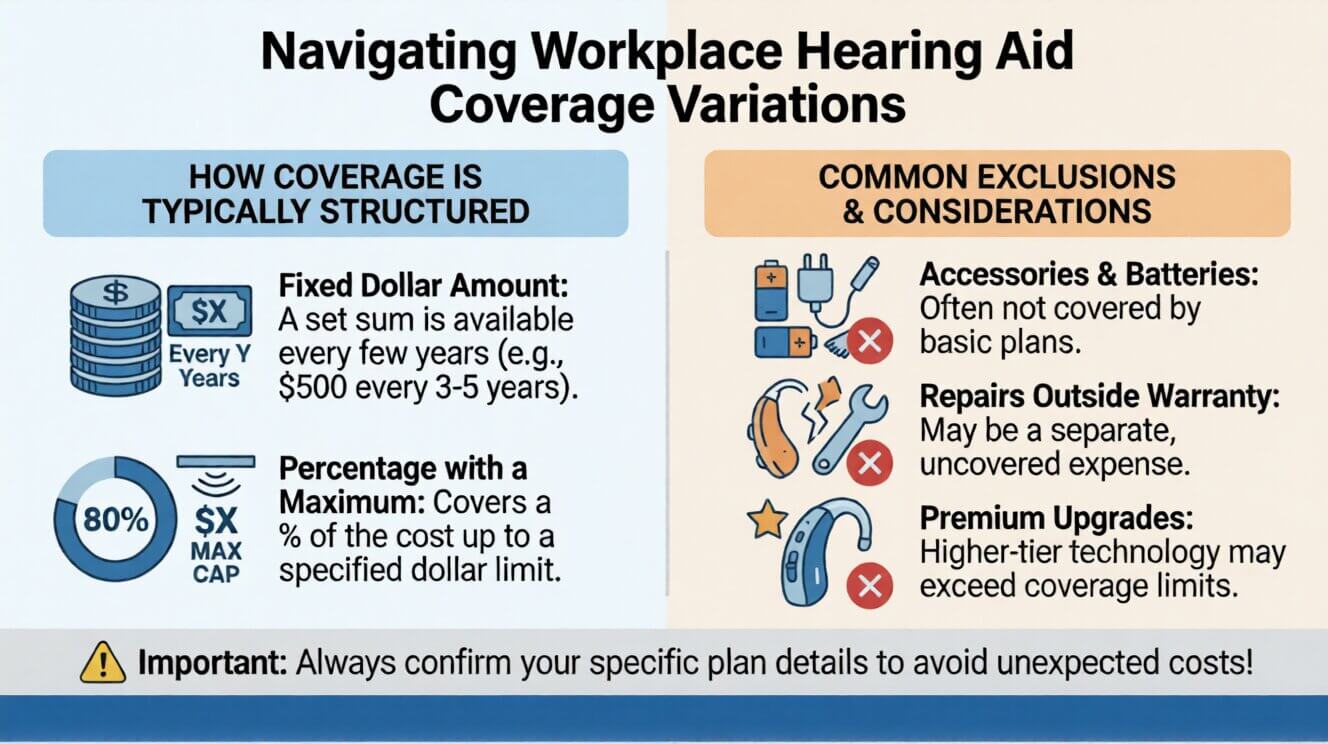
Most corporate and group insurance plans include extended health benefits that reimburse a portion of hearing aid costs. Coverage can vary significantly from one plan to another. Some plans offer a fixed dollar amount every few years, while others reimburse costs up to a specific maximum set by the insurer. It’s also important to note that accessories, repairs, or premium technology upgrades may not always be included.
Required Documents and Checking Eligibility
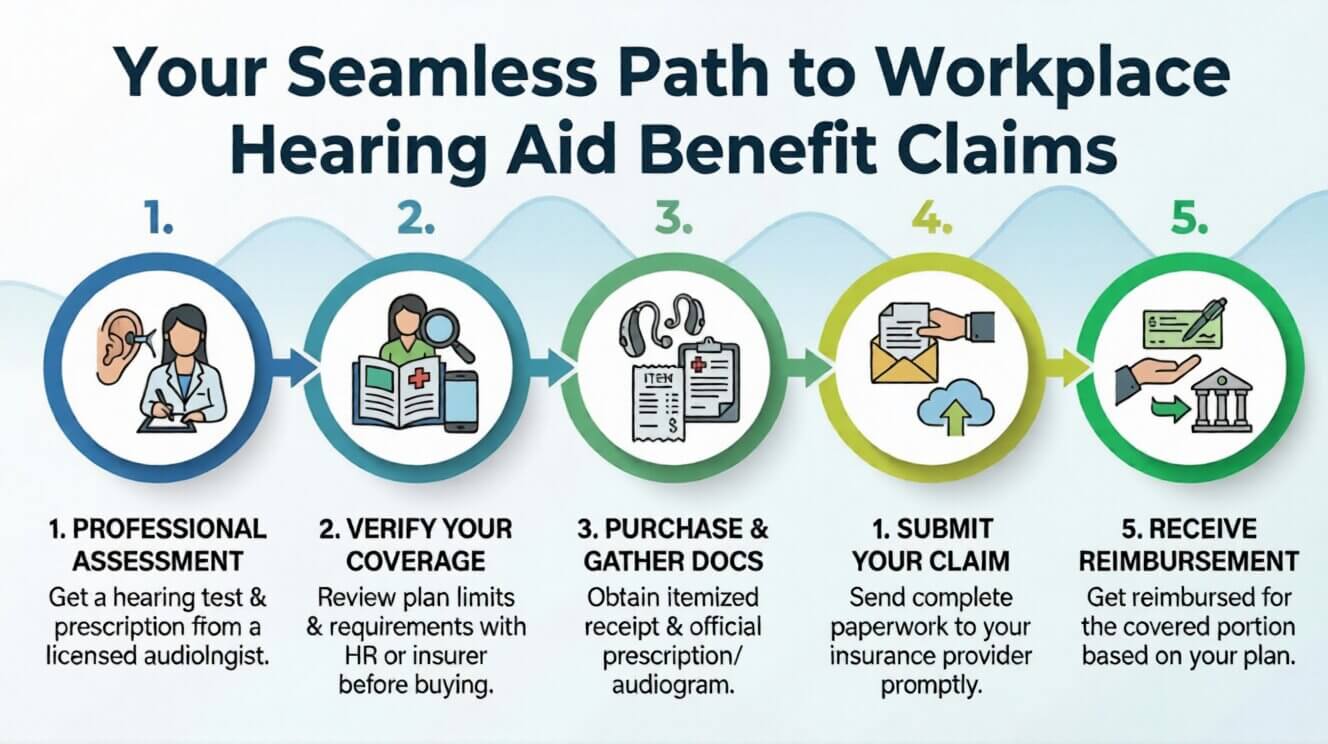
Insurance providers typically require proper documentation to process a claim. This usually includes a prescription or audiogram from a licensed audiologist offering hearing aid services, along with an itemized receipt. Without the required paperwork, claims can be delayed or denied.
Employees covered under unionized plans or larger employer group plans may have more comprehensive coverage. Before purchasing hearing aids, it’s a good idea to review your benefits booklet or speak with your HR department or benefits administrator to understand exactly what is covered.
If your workplace benefits for hearing aids do not fully cover the cost, additional financial assistance may be available through certain provincial or disability support programs, depending on eligibility. We’ll be exploring these options in more detail in future posts.
Final Thoughts
In short, corporate benefits in Ontario can significantly reduce the cost of hearing aids, but coverage limits and requirements vary. Taking the time to confirm your benefits ahead of time can help you avoid unexpected out-of-pocket expenses.
Call and book a FREE Hearing Test at Hearvana today, and we will assist you with checking what your benefits so that the process is seamless for you!
Does OHIP cover hearing tests for seniors in Ontario?
OHIP does not directly pay for routine hearing tests at a private audiology clinic. However, the Ontario Assistive Devices Program (ADP) helps cover the cost of hearing aids for eligible residents, and many clinics, including Hearvana, offer a complimentary initial hearing screening.
Are hearing aids free for seniors in Ontario?
Hearing aids are rarely fully free, but they are heavily subsidized. Through ADP, the province pays a set grant per hearing aid, and additional help may be available through private insurance, veterans’ benefits, or programs for specific groups. You pay the remaining balance.
How much does the Assistive Devices Program (ADP) cover?
ADP pays a fixed amount toward each hearing aid for eligible Ontario residents with a valid health card, once every set number of years. Your clinic bills ADP directly, so the grant is deducted from your cost up front rather than reimbursed later.
Who is eligible and how do I apply?
You qualify if you are an Ontario resident with a valid health card and a hearing loss confirmed by an audiologist. There is no age limit. Your audiologist completes the ADP application for you as part of the fitting process. See the official Ontario Assistive Devices Program page for current grant amounts and details.

Written by
Tamar Nosovsky
Founder & Audiologist, Hearvana Audiology
Tamar Nosovsky is the founder and audiologist at Hearvana Audiology, a mobile and in-clinic hearing care practice in Vaughan serving Thornhill and the Greater Toronto Area. She leads the clinic's hearing assessments, hearing aid fittings, and follow-up care.
