


Last updated: August 25, 2026
Hearing aids do a lot of quiet work every day, and most of what keeps them working well has nothing to do with the technology inside them. It comes down to habits. If you want to know how to maintain hearing aids so they keep sounding the way they did on day one, the routine is shorter than most people expect: a few minutes each night, a slightly longer check each week, and one recurring visit with our hearing aid fitting team to catch anything a cloth and a brush cannot fix.
This checklist covers what to do daily, weekly, and monthly, plus the handful of problems that come up often enough to name specifically, so you know which ones are a two minute fix and which ones need a professional.
Listen to this article as a podcast
Hearing Aid Maintenance Checklist
A walkthrough of the daily, weekly, and monthly hearing aid care routine, plus common troubleshooting fixes.
Daily care, in the order it actually happens
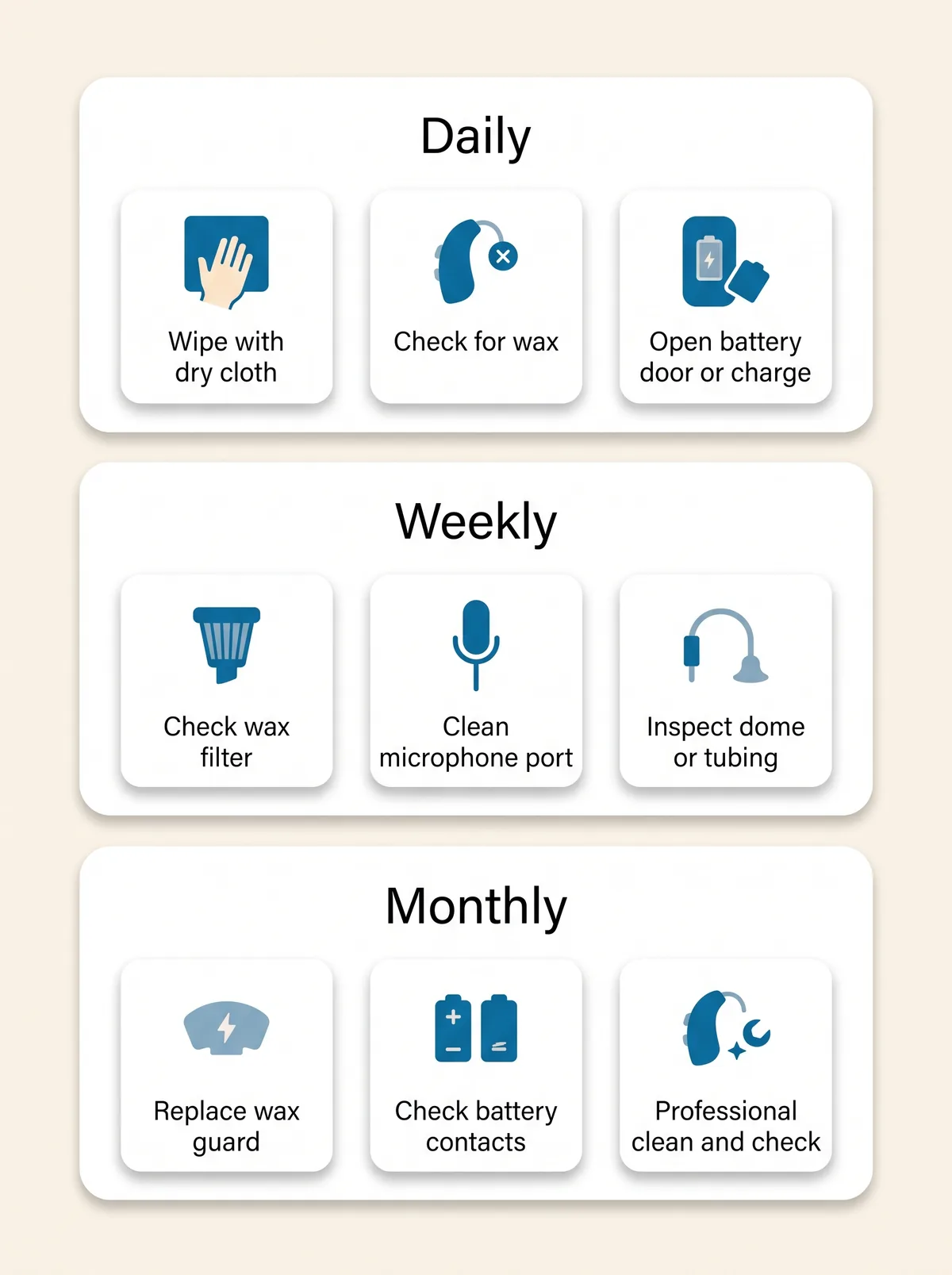
- Wipe them down at night. A soft, dry cloth over the case and the part that sits in or behind your ear removes the oils and dust that build up over a day of wear. Manufacturers including Oticon are specific that hearing aids should never be washed or submerged, and a dry cloth is the right tool for daily cleaning.
- Check the dome or earmold for wax. A quick look under good light tells you whether the tip needs a wipe before it goes back in tomorrow.
- Open the battery door, or place rechargeables on the charger. Leaving the battery door open overnight lets any trapped moisture evaporate, and it is also how most hearing aids power off.
- Store them somewhere consistent and dry. A dedicated case on a nightstand beats a pocket, a bathroom counter, or wherever they happened to land.
Did you know
A dehumidifier or drying capsule case is worth the small cost if you live somewhere humid, sweat heavily, or wear hearing aids during exercise. Moisture is one of the more common reasons hearing aids stop performing consistently, and a drying routine is a simple way to manage it.

The weekly check most people skip
Once a week, take a closer look than the nightly wipe down allows.
Wax guards and filters
Most behind the ear and receiver in canal hearing aids use a small wax filter that catches debris before it reaches the microphone or receiver. Oticon’s own care guidance recommends replacing the wax filter at least monthly, or sooner if sound starts to seem muffled or a hearing aid stops working normally. Keeping a small stock of replacement filters at home means you are not stuck waiting on one when it happens.
Microphone ports
The small openings where sound enters the device can collect dust and lint over time. A soft brush, the kind that usually comes in the cleaning kit from your fitting, clears this gently without pushing debris further in.
Tubing and domes, if you wear them
Silicone domes and tubing pick up wax and oil from the ear canal. A weekly wipe, and a swap for a fresh dome on the schedule your fitting team recommends, keeps the seal working the way it is designed to.
Monthly and seasonal habits
Some habits only need to happen every few weeks, but they matter just as much as the daily routine.
- Full wax guard replacement even if it does not look full, on a monthly rhythm.
- Case inspection. A cracked charging case or a dome that has gone stiff and discoloured is worth replacing rather than pushing through the season with it.
- A professional clean and check. Bringing your hearing aids in periodically for a deeper clean and a listening check catches things a home routine physically cannot, like internal moisture or a receiver that has drifted out of calibration.
Save your money
Rinsing a wax filter with water or using a household cleaning product on the hearing aid shell can damage the electronics. A dry cloth and the proper replacement filters cost far less than an out of warranty repair, and they are the maintenance method every major manufacturer, including Phonak, actually recommends.
Troubleshooting the problems that come up most
Most day to day hearing aid issues trace back to one of a handful of causes. Here is a quick way to narrow it down before assuming the worst.
| What you are noticing | Likely cause | Try this first |
|---|---|---|
| Sound is muffled or quiet | Clogged wax filter or dome | Replace the wax filter or clean the dome, then test again |
| No sound at all | Dead battery or device powered off | Check battery or charge level, confirm the device is switched on |
| Whistling or feedback | Loose fit or wax buildup in your ear | Reseat the device; if it continues, book a fit check |
| Intermittent cutting out | Moisture or battery contact residue | Dry overnight in a dehumidifier case, gently clean contacts |
| Sound seems distorted | Debris in the microphone port | Brush the port gently with the cleaning tool from your kit |
If you have worked through the obvious fixes and something still feels off, that is exactly what a check-in appointment is for. It is much easier to fix a small issue early than to keep working around it for months.
Why maintenance and fit go together
A cleaning routine only goes so far if the hearing aids themselves are not the right fit for how your hearing has changed. Hearing needs shift over time, and a device that felt perfectly calibrated a year ago can start to feel slightly off even when it is spotlessly maintained. That is normal, and it is a fit and programming question rather than a cleaning one.
Custom fit accessories matter here too. If a dome keeps working loose or a standard tip never quite seals right, getting custom tips are worth asking about at your next visit.

Good to know
This article is general information, not a diagnosis or a substitute for a professional hearing assessment. Hearing changes have many possible causes, and only a qualified hearing health professional who examines you can tell you what is actually happening in your ears. Cleaning and care steps here are general guidance; always follow the specific instructions that came with your device model. Hearvana is not responsible for decisions made solely on the basis of this article.
Download the free quick guide
A printable daily, weekly, and monthly hearing aid care checklist you can keep by your charging station.
Frequently asked questions
How often should hearing aids be professionally cleaned?
Most hearing health professionals recommend a professional clean and check every few months, though the right interval depends on how much earwax you naturally produce, how often you wear the devices, and the environment you wear them in. Ask your provider to recommend a schedule based on your own ears rather than a generic timeline.
Can I use alcohol wipes or disinfectant spray on my hearing aids?
Check your specific manufacturer’s guidance before using anything beyond a dry, soft cloth. Many cleaning products and solvents can damage the microphone, the receiver, or the protective coating on the shell. When in doubt, ask your hearing aid provider which products, if any, are approved for your model.
What should I do if I drop a hearing aid in water?
Power it off immediately, dry the outside gently, remove the battery if it uses one, and place it in a dehumidifier case or drying kit as soon as possible. Do not use a hair dryer or other direct heat source. Contact your hearing aid provider promptly, since how the device is handled in the first few hours can affect the outcome.
Do rechargeable hearing aids need less maintenance than battery models?
They remove one task, battery swapping, but everything else on this checklist still applies. Wax filters still clog, microphone ports still collect dust, and charging contacts still need the occasional wipe. The daily and weekly routine is nearly identical either way.
A little consistency goes a long way with hearing aid care. If something on this list has been slipping, or your devices have not had a proper professional check in a while, Hearvana serves Vaughan and the surrounding area including King City and Woodbridge, and you can book a hearing aid check-in to get everything looked at properly.
