


Last updated: August 4, 2026
Last updated August 2026, reviewed by Tamar Nosovsky, Audiologist.
Let’s skip the complicated medical jargon right away. When people walk into our clinic here in Vaughan, they usually just want a straight answer about fixing their hearing. Figuring out the best type of hearing aid shouldn’t require a science degree or hours of confusing online research. At Hearvana Audiology, we believe this entire process has to be personal, comfortable, and completely transparent. Finding a device that fits your life perfectly comes down to understanding how different styles actually work on a daily basis. We see patients constantly who are overwhelmed by all the options on the market. Our goal is to break things down simply, step by step.
The Power Behind the Ear (BTE) and Receiver in Canal (RIC)
Most of the time, the best type of hearing aid for overall performance sits comfortably behind your ear. These are generally split into two distinct categories: standard Behind-The-Ear (BTE) models and Receiver-In-Canal (RIC) options. The main computer rests tucked away behind the cartilage, while a thin wire or tube sends the sound directly into your ear canal.
- BTE Devices: These house all the electronics in a durable casing right behind the ear. Sound travels through a clear tube down into a custom earmold. They pack a serious punch, making them fantastic for profound hearing loss.
- RIC Devices: The speaker itself sits directly inside your ear canal instead of in the main casing. This specific setup delivers incredibly crisp audio while keeping the physical footprint tiny. We love recommending these because they are lightweight, comfortable, and keep the ear canal feeling open rather than plugged up.
If you struggle with constant background noise at restaurants or family gatherings, a RIC might easily be the best type of hearing aid for you. The directional microphones on these models are larger and spaced out properly on the outer casing. That physical distance helps the internal computer figure out exactly where speech is coming from, naturally quieting down the annoying chatter happening behind your back.
Going Unnoticed: In-The-Ear (ITE) and Invisible-In-Canal (IIC)
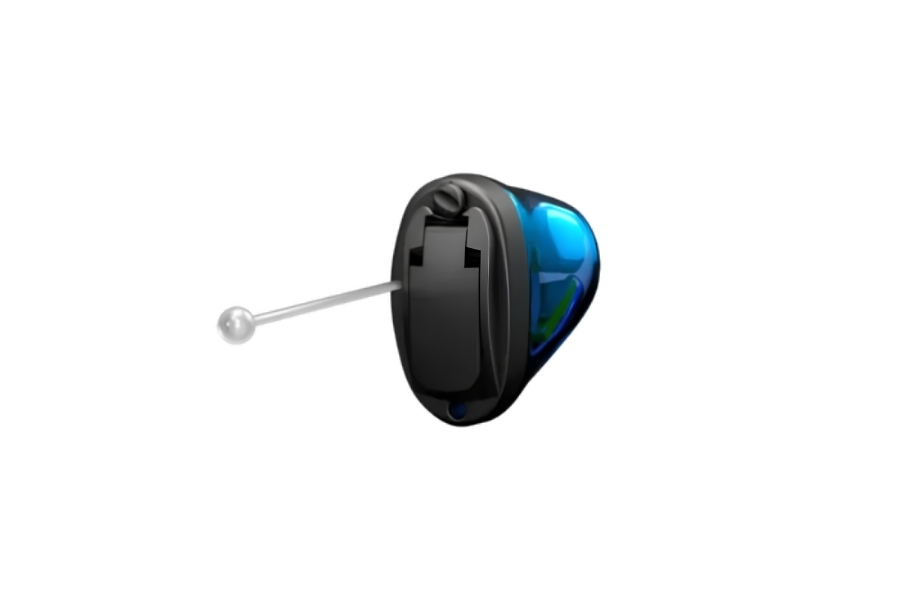
Some folks want their devices completely hidden from the world. We completely understand that preference. If total discretion is your main goal, the best type of hearing aid will likely be a custom-molded model that fits entirely inside the ear anatomy.
- In-The-Ear (ITE): These devices fill up the bowl of your outer ear. The slightly larger size allows for physical volume dials and bigger batteries. This makes them significantly easier to handle if you have arthritis, dexterity issues, or just hate fumbling with tiny parts.
- Invisible-In-Canal (IIC): We take a very deep physical impression of your ear canal and build a tiny device that sits completely past the second bend. People literally cannot see them even if they look closely.
There is always a trade-off with technology. Smaller devices have tiny batteries that need swapping out frequently, and they rarely have enough internal space for Bluetooth antennas. You have to decide if streaming phone calls directly to your ears matters more than having a completely invisible solution. We map out all these pros and cons during your visit so you know exactly what to expect.
How Lifestyle Determines Your Hearing Aid
Your daily routine dictates the exact technology you need to succeed. Someone working on loud construction sites across the GTA requires a drastically different setup than a retiree who mostly stays home reading or watching television. At Hearvana, we dig deeply into those lifestyle details before showing you a single product.
Do you spend hours on the phone for work? You will absolutely want a device that pairs with your smartphone instantly for clear calls. Are you tired of buying and storing tiny disposable batteries? Rechargeable models let you just drop the units into a sleek charging case on your nightstand before going to sleep.
We often pair new devices with our custom earmolds to maximize everyday comfort. Generic silicone domes sometimes slip out or cause annoying whistling sounds throughout the day. Getting a medical-grade mold crafted to the precise shape of your canal prevents all that feedback. It seals the sound in perfectly, which honestly makes any piece of technology perform significantly better. Plus, they don’t cause the soreness that generic domes sometimes do after eight solid hours of wear.
Our Trusted Brands We Offer

We are proud to be official carriers for the most respected manufacturers in the world. Having direct relationships with these companies means we offer you the absolute latest technology, complete with full warranties and support. Choosing the best type of hearing aid often comes down to matching a specific brand’s unique sound philosophy to your lifestyle.
- Signia: Perfect if you worry about your own voice sounding boomy or trapped. Their Own Voice Processing (OVP) technology makes your speech sound completely natural to you. We highly recommend the Signia Pure Charge&Go IX, which uses a dual-processing system to pull speech forward while pushing background noise away.
- Phonak: An absolute powerhouse for digital connectivity and automatic adjustments. Their AutoSense OS™ system continuously analyzes your environment and changes settings in real time. The Phonak Audéo Sphere Infinio is a fantastic choice for noisy restaurants, the Naída Lumity handles heavy-duty amplification needs, and the custom Virto Infinio line offers total discretion.
- Oticon: Rather than blocking out background noise, their BrainHearing™ technology provides a balanced, 360-degree soundscape. Giving your brain access to the whole room cuts down significantly on listening fatigue. The Oticon Intent miniRITE is incredibly popular for delivering this detailed audio profile, while the Oticon Own SI hides away right inside the canal.
- Widex: Musicians and audiophiles almost always lean toward this brand. They practically eliminated the tiny digital processing delay that causes an artificial echo, resulting in a remarkably pure sound. The Widex SmartRIC is a standout model here, and it includes their famous Zen therapy programs to help soothe constant ringing in the ears.
Finding the right match doesn’t have to be a guessing game. By sitting down and walking through these lineups together, we can pinpoint exactly which manufacturer will make your daily conversations effortless again.
Financial Support
Cost is always a major factor when looking at medical devices. Luckily, buying one in Ontario is completely tax-free at the point of sale. You won’t pay a single cent of HST on your new equipment. On top of that great news, we proactively help our patients navigate available funding through programs like WSIB, ODSP, and VAC. A lot of locals qualify for substantial financial support and don’t even realize it until they sit down with our staff.
Wrapping it Up
The best type of hearing aid is the one that matches your hearing loss, lifestyle, comfort preferences, and budget. Whether you need powerful behind-the-ear technology, a nearly invisible design, or advanced Bluetooth features, the right choice starts with a professional assessment. At Hearvana Audiology, we’ll guide you through every option, answer your questions, and help you find a solution that lets you hear conversations, music, and everyday life with greater confidence.

Written by
Tamar Nosovsky
Founder & Audiologist, Hearvana Audiology
Tamar Nosovsky is the founder and audiologist at Hearvana Audiology, a mobile and in-clinic hearing care practice in Vaughan serving Thornhill and the Greater Toronto Area. She leads the clinic's hearing assessments, hearing aid fittings, and follow-up care.
