

Last updated: August 4, 2026
Last updated August 2026, reviewed by Tamar Nosovsky, Audiologist.
Have you ever thought about when your last hearing test was? Most of us stay on top of dental cleanings, eye exams, and annual physicals. But hearing health? That often gets pushed aside. We tell ourselves, “I can hear fine,” or “I’ll deal with it later.” The reality is different.
According to the World Health Organization (WHO), more than 1.5 billion people worldwide live with some degree of hearing loss, and many don’t even realize it. That’s why World Hearing Day, observed every year on March 3, exists. It’s a global reminder that hearing care is essential, not optional.
At Hearvana, we see firsthand how small hearing changes can quietly impact daily life. The good news? Early attention can make a big difference. World Hearing Day isn’t about alarms, it’s about awareness. Think of it as your yearly reset button for better hearing health.
What Is World Hearing Day?
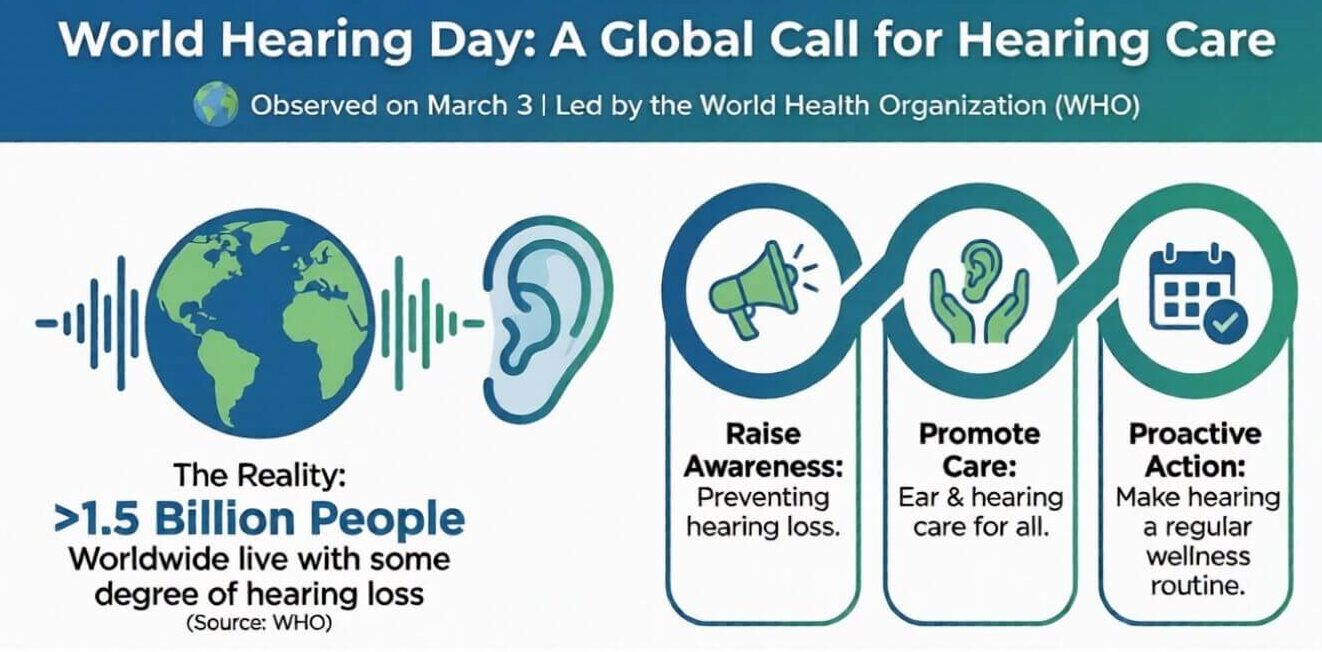
World Hearing Day is led by the World Health Organization (WHO) to raise awareness about preventing hearing loss and promoting ear and hearing care worldwide.
Each year, the focus is on early detection and proactive care. And that’s a message we strongly support at Hearvana, hearing care should be part of your regular wellness routine, just like checking your vision or blood pressure. Because hearing loss is often gradual. It doesn’t usually happen overnight. It creeps in slowly, making it easy to overlook.
Why Hearing Health Matters More Than You Think
Hearing affects far more than your ears. It influences your brain, your relationships, your confidence, and your safety. Let’s break it down:
1. Hearing and Brain Health: The Cognitive Connection
Your ears collect sound, but your brain processes it. When hearing becomes unclear, your brain works harder to fill in missing sounds. This extra strain, known as cognitive load, can leave you feeling mentally fatigued after conversations.
Research has shown a connection between untreated hearing loss and an increased risk of cognitive decline. While hearing loss itself doesn’t cause dementia, reduced stimulation and social withdrawal may contribute to long-term brain changes.
In simple terms: sound keeps your brain active. Conversations, background noise, music, they all provide mental engagement. By addressing hearing concerns early, you’re not just improving sound clarity. You’re supporting overall brain wellness.
2. Hearing and Relationships: Communication Is Everything
Communication shapes our connections. If you’ve ever nodded along because you didn’t quite catch what someone said, you’re not alone. Many people experience subtle hearing changes that affect conversations long before they realize it. Over time, untreated hearing difficulties can lead to:
- Repeated misunderstandings
- Frustration between partners
- Avoiding social gatherings
- Feeling isolated in group settings
At Hearvana, we often hear patients say, “I didn’t realize how much I was missing.” When hearing improves, conversations feel natural again. Confidence returns. Social events become enjoyable instead of exhausting. Protecting your hearing means protecting your relationships.
3. Hearing and Quality of Life: Confidence, Independence, and Safety
Hearing is also about awareness. It helps you:
- Hear doorbells, alarms, and alerts
- Stay aware of traffic and surroundings
- Follow conversations in busy environments
- Feel confident in professional settings
When hearing changes go unaddressed, some people begin to withdraw. Restaurants feel overwhelming. Meetings become stressful. Social outings are avoided. But today’s hearing solutions are discreet, comfortable, and technologically advanced. They’re designed to enhance everyday living, not disrupt it. Taking care of your hearing isn’t about aging. It’s about maintaining independence and staying connected to life’s moments.
A Quick Hearing Health Self-Check
This World Hearing Day, take a moment to reflect. Ask yourself:
- Do you ask people to repeat themselves frequently?
- Do you struggle to follow conversations in noisy places?
- Do others mention that your TV volume is high?
- Do you feel mentally drained after group conversations?
- Do certain voices sound muffled or unclear?
- Do you avoid social situations because hearing feels challenging?
If you answered “yes” to more than one of these, it may be time to schedule a hearing test with our audiologist. Not because something is “wrong” but because proactive care is powerful. World Hearing Day is the perfect time to take action. Here are simple steps you can start today:
- Book a hearing assessment: A comprehensive hearing test at Hearvana is painless, straightforward, and provides valuable insight into your hearing.
- Protect your ears from loud noise: Use ear protection at concerts, sporting events, or while using loud equipment.
- Monitor headphone use: Keep volume levels moderate and take listening breaks.
- Address concerns early: If you notice subtle changes, don’t wait. Early care often leads to better outcomes and easier adjustments.
Why Choose Hearvana for Your Hearing Care?

We believe hearing care should feel supportive, informative, and personalized, never rushed or intimidating. When you visit our clinic, you can expect:
- Comprehensive hearing evaluations
- Clear explanations of your results
- Customized treatment recommendations
- Ongoing support and follow-up care
Our goal is simple: help you hear better and live better. World Hearing Day is a global initiative, but your hearing journey is personal. We’re here to guide you every step of the way.
World Hearing Day is more than just a date on the calendar. It’s a reminder that hearing health deserves attention at every stage of life. Your hearing connects you to conversations, laughter, music, and the subtle sounds that shape your day. It supports your brain, strengthens your relationships, and helps you stay confident and independent.
This month, take one small step:
- Book a hearing test.
- Encourage a loved one to get checked.
- Learn more about protecting your hearing

Written by
Tamar Nosovsky
Founder & Audiologist, Hearvana Audiology
Tamar Nosovsky is the founder and audiologist at Hearvana Audiology, a mobile and in-clinic hearing care practice in Vaughan serving Thornhill and the Greater Toronto Area. She leads the clinic's hearing assessments, hearing aid fittings, and follow-up care.
